Blank Check Stock: The Quiet Upstream Engine of Modern Check Fraud
- Blank check stock is a critical upstream asset for check fraud
- Fraud rings mass-produce counterfeit checks using blank stock and digital tools
- Stronger controls around procurement and issuance can disrupt this fraud pipeline
Blank check stock has become one of the easiest “upstream” tools for check fraudsters to obtain and weaponize, turning ordinary office supplies into high‑yield crime infrastructure.
In a recent LinkedIn post, David Maimon, Professor at Georgia State University and Head of Fraud Insights at SentiLink, calls blank check stock a “critical upstream asset in the check fraud ecosystem.” He notes that once this paper is paired with stolen routing numbers, account details, and business identity data, it can be transformed into counterfeit business checks, mule deposit instruments, check‑washing replacements, high‑value mobile deposit checks, and tools for refund and payroll diversion.

That framing is important: The fraud doesn’t start at the teller window or in the mobile app; it starts with the quiet, low‑friction acquisition of blank, security‑patterned paper.
How Easy Is It to Get Blank Check Stock?
A simple search for “check stock” on major marketplaces like Amazon returns thousands of results, many priced cheaply and available with fast shipping, in business‑ready quantities. Dedicated check‑stock vendors openly advertise bulk blank business checks—500, 1,000, even 10,000 at a time—promoting low cost, compatibility with common accounting software, and quick delivery.
While many of these products include legitimate security features such as microprinting, watermarks, and special inks, their broad availability at scale means fraudsters can easily blend their counterfeit items into normal business check flows.
What Fraudsters Can Do with Blank Check Stock
Once a fraud ring has blank check stock in hand, the playbook branches quickly:
How to Detect Counterfeit Checks
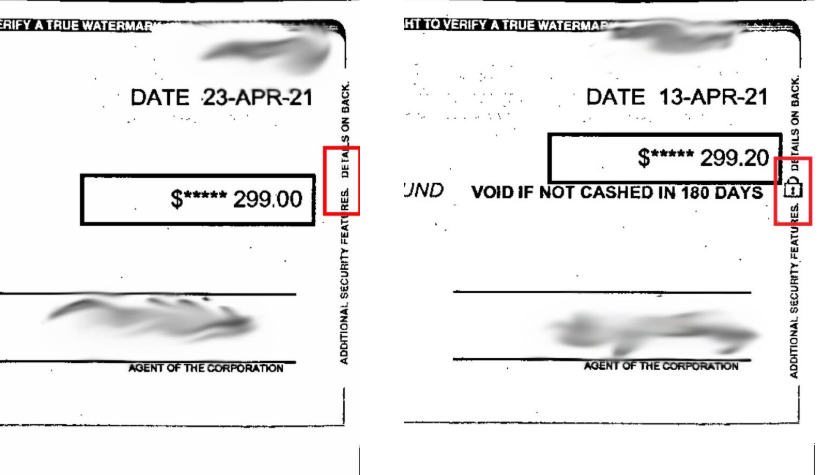
In order for financial institutions to detect counterfeits, they must deploy advanced AI-powered check stock analyzers that compare the item to previous cleared items. This technology meticulously analyzes the attributes, layout, and relative coordinates of designated preprinted fields, which serve as “anchor points” on the check.
Additionally, new analyzers like security symbol and border detection enhance check fraud detection capabilities. These new features empower the system to conduct a more thorough examination of security elements that are critical to verify and compare a check's authenticity to previously cleared checks.
By evaluating each relevant field, the system assigns a risk score, offering a comprehensive overview of potential check fraud risks associated with the check.