OrboGraph Publishes New Analysis of Suspicious Activity Reports (SARs) Trends
- Overall SAR filings fell 6% between 2024 to 2025
- Check fraud SAR filings continue to dominate
- Flat “Other Fraud” SARs show fraud risk shifting, not disappearing
For years, the industry relied on the American Bankers Association’s (ABA) Deposit Account Fraud Survey as the central source for fraud trends. However, with the last report being published back in 2020 based on 2018 data, the industry has relied on SARs as a benchmark for fraud trends for the past 5+ years, particularly when it comes to check fraud.
As part of our commitment to the industry, OrboGraph has a published a new report analyzing Suspicious Activity Reports (SARs) filed by U.S. depository institutions -- highlighting the important shifts and trends in fraud between 2024 and 2025.
Highlights from the Report
Total SAR filings declined modestly from 595,889 in 2024 to 559,911 in 2025, representing a 6% overall reduction.
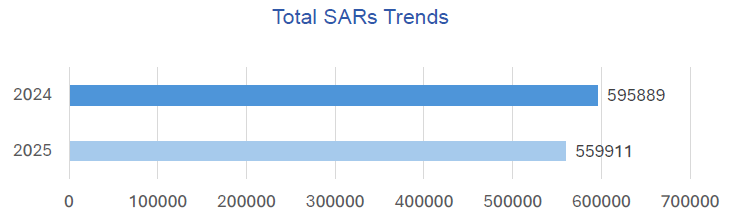
While this decrease may suggest some progress in fraud mitigation, the underlying data shows that check fraud continues to dominate suspicious activity reported by financial institutions.
Overall check fraud SARs dropped from 481,766 (81% of 2024 total) to 446,216 (80% of 2025 total), a decrease of 35,550 (7.4%).
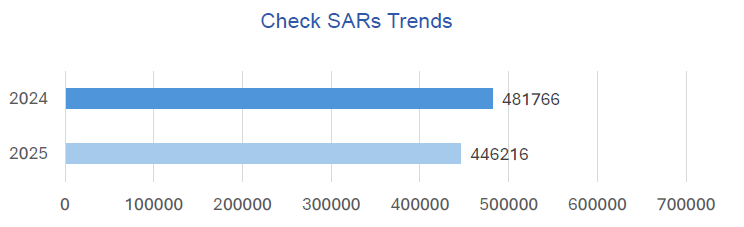
This trend aligns with declining check usage and improved controls, but it does not mean fraudsters are retreating. Instead, they are adapting—forcing financial institutions to rethink how risk is detected and reported.
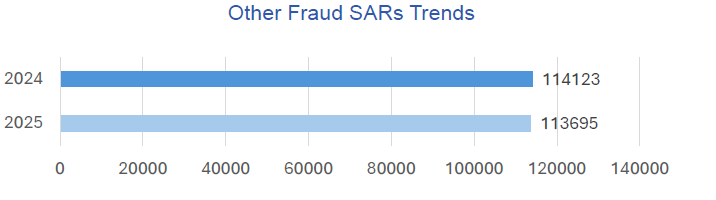
While check SARs declined, “Other Fraud” filings remained essentially flat. This category captures modern, fast‑moving threats such as account takeovers, social engineering, and complex scams that often bypass traditional detection methods. Stability here signals persistence: fraud risk is not shrinking—it’s shifting.
The full report from OrboGraph provides deeper analysis of SAR trends by regulator, instrument type, and fraud category, helping financial institutions better understand where risks are shifting and how fraud prevention strategies may need to adapt. Complete the form below to download the full report.