Post-Pandemic Fraud: Be Proactive, Not Reactive
- The pandemic has created a definite uptick in fraud
- Rather than reactive, FIs should be PROACTIVE in their approach to combatting fraud
- It's time to "think like a fraudster"
James Ruotolo, a senior manager in the fraud and financial crimes practice at Grant Thornton, contributed a valuable article to ABA Bank Compliance magazine which discusses ways in which potential fraud victims can turn the tables and actually "play offense" against the fraudsters.
While this may seem like dire news, all is not lost. This situation is a good reminder that fraud is not a static problem: Fraud is constantly evolving, and organizations must adapt with it in order to remain vigilant. What can we do to protect our FIs from this increased fraud risk? Here are six specific recommendations to bolster your fraud risk posture.
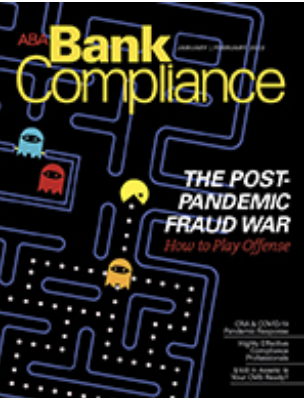
An interesting observation Mr. Ruotolo makes is that pandemic stimulus frauds are likely to "usher in a new generation of fraud actors" who will use newfound techniques on more traditional targets when the pandemic benefit programs cease -- making 2022 fraud risk even higher for most FIs than in the past. Mr. Ruotolo notes that "compliance officers must prepare for the shifting grounds that may lead to new regulation."
Financial Institutions especially have not been spared from this recent uptick in fraud activity. In fact, bank compliance professionals have had to deal with a variety of distinctive challenges over the past two years. The dramatic change in consumer behavior brought on by pandemic restrictions made fraud detection models based on prior customer behavior less effective. And while there has been an understandable focus on pandemic-related schemes, traditional fraud attempts didn’t go away. Those traditional fraud attempts still had to be addressed even as banks were processing a high volume of PPP loans. These issues are made even more challenging by a transition to remote work and—more recently—staffing shortages.
Six Ways to Prepare for Fraud
In the article, Mr. Ruotolo provides readers with six specific recommendations:
Be Proactive, Not Reactive
Mr. Ruotolo notes that "fraud is not a static problem: fraud is constantly evolving, and organizations must adapt with it in order to remain vigilant." Financial institutions cannot remain stagnant; they should always have an eye to updating their policies, procedures, and especially their technologies.
When assessing the industry, the evidence and data make it clear that check fraud is still prevalent and the most vulnerable payments channel. FIs need to continue to evaluate their internal processes regarding how they handle check fraud and what measures are in place to detect fraudulent checks. Many FIs are still utilizing manual review as part of their process, but these fraud analysts are inundated with thousands of false positives which require enormous resources to review and clear.
This is where FIs can take advantage of technology to enhance their fraud detection capabilities. Deploying image-forensics AI for Check Stock Validation (CSV-AI), Automated Signature Verification (ASV-AI), and Alteration Detection is an effective method for fraud detection, as the technology is able to interrogate the attributes of the check images and -- through hundreds of tests -- identify which checks are suspect and subsequently sent to fraud analysts. The technology is able to quickly process thousands of checks -- significantly reducing the number of checks needing review by fraud analysts.
As FIs continue to expand their fraud capabilities in 2022 and beyond, it's more important than ever to incorporate innovative technologies to bring the fight to the fraudsters.