What Is Really Stopping Adoption of Real-Time Payments
- Real-time payments adoption is lagging, with ERP and back-office integration as the main barrier.
- Checks still dominate B2B payments despite faster, modern rails.
- FIs can support checks while automating processing with AI for cost and efficiency gains.
The industry has been proclaiming the benefits of real-time payments, and how they will be the "death of checks." However, for all the perceived and proven benefits -- including speed, cashflow, revenue recognition -- adoption has been slow. So, why is it that traditional payments like checks still dominate B2B payments?

According to the latest PYMNTS Intelligence research with The Clearing House, the bottleneck is no longer the rails, it is the back office. Specifically, PYMNTS.com points out that integration into existing systems has proven to be the major hurdle.
The report data suggests the single biggest obstacle to broader real-time B2B payment adoption is not one of fraud concerns, transaction costs or supplier resistance. It is integration.
Real-time payments lose their speed, and much of their contextual value, when they’re forced to fit the square-peg-round-hole realities of legacy treasury management systems, enterprise resource planning software and accounts payable workflows.
Additionally, the research found that 29% of businesses with over $25 million in annual revenue cited ERP integration as the most important improvement for payment performance. ERP interoperability was also the top driver of adoption, the most requested enhancement, and a key reason many businesses hesitate to adopt new payment rails.
B2B Favoring Check Payments
As we covered previously, AFP notes in their survey that 87% of businesses surveyed still utilize checks.
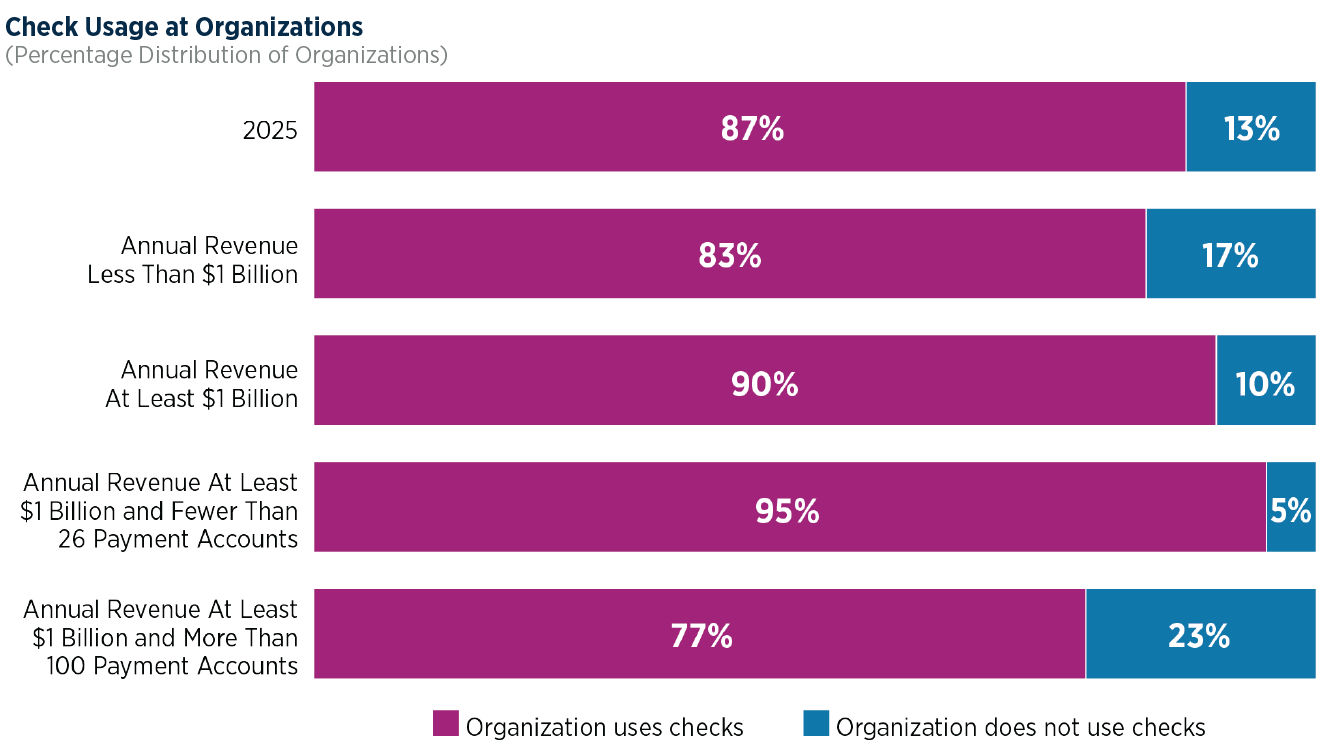
Additionally, 72% of organizations that use checks plan to continue doing so for the foreseeable future. Among these organizations, more than two-thirds (68%) point to vendor requirements as a key reason for maintaining check usage.
When taking all this information into account, it appears that many business will continue to utilize check payments as long as the integration into existing systems and process continues to be complex and difficult.
What Does This Mean for Financial Institutions?
As long as businesses see real-time payments as incompatible with their workflows and current technologies like ERPs, they will continue to default to their current process and payment vehicles -- meaning that checks will persist for a long time.
Financial institutions will continue to need to support legacy payments like checks. But rather than just stand pat, FIs can deploy AI technologies to automate the processing of checks -- reducing operational costs and increasing efficiency.

Financial institutions can also advance intelligent banking by using AI-powered solutions to operationalize newly created data alongside the data they have collected for years.