Mastercard: Early Adopters of AI-Driven Fraud Detection See 2X Cost Savings
- Generative AI drives a surge in deepfakes and instant-payment fraud
- Banks deploy AI to monitor transactions and block attacks in real time
- Behavioral analytics reduce false positives, protect revenue, and strengthen customer trust
AI is rapidly reshaping the fraud landscape, and a Mastercard.com post argues that banks can no longer afford to treat it as a “nice to have” in their fraud prevention strategy.
While generative AI is supercharging deepfakes, synthetic identities, and impersonation scams, the same technology is enabling financial institutions to detect and stop fraud in real time, cut manual workloads, and protect customer trust at scale.

Mastercard presents the stark economics of today’s fraud problem: global fraud losses topped an estimated $485 billion in 2023, and organizations lost an average of $60 million to payment fraud in the past year alone. Generative AI is a key accelerator, making it cheap and easy for criminals to create highly convincing phishing attempts, voice clones and video deepfakes that drive social engineering scams.
Deloitte research, cited in the post, suggests gen AI could help push U.S. fraud losses to $40 billion by 2027, more than triple 2023 levels.
AI-Driven Fraud Prevention
Against this backdrop, Mastercard’s survey of payments executives shows banks are under pressure to respond with equally sophisticated tools. Leaders identify synthetic identity fraud, impersonation scams and cross-border fraud as the fastest-growing threats, with e‑commerce fraud, BNPL (Buy Now, Pay Later) abuse, and deepfakes close behind.
Real‑time payments add another layer of urgency -- with money moving instantly, institutions have only seconds to spot and stop AI‑powered attacks.
The article positions AI‑driven fraud prevention as the most effective response. Instead of relying on rigid, rules‑based systems that flag transactions by simple thresholds or geographies, banks are deploying models that analyze millions of data points in real time to assess transaction risk.
According to Mastercard’s 2025 payment fraud prevention report, 85% of surveyed organizations report seeing returns from AI in fraud case triage, transaction pattern recognition, and real‑time detection, and 83% say AI has sped up investigations and case resolution.
Overall, organizations that have invested in AI for more than five years report average savings of $4.3 million in recovered revenue—nearly double the $2.2 million for newer adopters—highlighting the payoff of sustained, data‑driven investment.

AI-Driven Fraud Detection: From Card to Checks
When reading the article, one can see that the same principles and technologies are actively being used by financial institutions to fight check fraud. Over the past few years, financial institutions that have actively utilize AI technologies like image forensic AI, transactional analysis, behavioral analytics, rules engine, and consortium data are saving the FI and their customers millions of dollars each year.
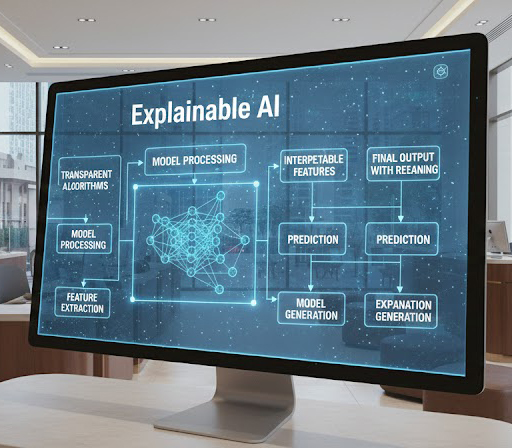
This is accomplished by layering these technologies, ensuring that if a fraudulent items passing through one layer, the next layer(s) are able to flag the item. This results in a 95%+ detection rate while reducing the number of false positive -- easing the burden on fraud analysts. Additionally, the introduction explainable AI (XAI) provides clarity to fraud analysts to focus on the specific reasoning for the item being flagged. This enables the them to review items more quickly, saving precious time and resources.
While many early adopters are reaping the benefits, it does not mean that late adopters or FIs who have yet invested cannot still receive the benefits. These technologies are readily available to be integrated directly from providers like OrboGraph or through their service bureaus or third party fraud vendors -- enabling maximum flexibility for the FI.
Want to learn more? Click the demo button to schedule a 30-minute discussion and solution demonstration.