Payee Problems: The Overlooked Weak Point Fraudsters Love to Exploit
- Fraudsters exploit the payee field to alter checks and avoid detection
- Techniques include check washing, digital editing, and adding extra payee names
- Banks can use AI tools to identify alterations and strengthen payee field security
While check fraud tactics have drastically evolved over the past decade, it is easy to overlook that fact that the crime is often simply committed by focusing on one particular area: The Payee Field.
While many criminal organizations have the latest technologies to cook hundreds of checks in a few hours, a large portion of check fraud is still performed by small-time fraudsters who don't possess those tools. Instead, these fraudsters steal legitimate checks, modify them, and deposit the altered items.
The rise of mobile remote deposit capture (mRDC) and ATM deposit capabilities has made this method even easier, as these deposit methods often bypass the in-person scrutiny of a bank employee. The combination of traditional check alteration techniques and modern digital deposit tools has created new opportunities for fraud that financial institutions must address.
Tactics Fraudsters Use to Alter the Payee Name
One of the most longstanding and prevalent methods for altering the payee field is check washing. In this scheme, criminals steal checks—often from mailboxes or postal drop boxes—and use solvents such as acetone, bleach, or rubbing alcohol to dissolve the ink. Once the original payee information is removed, they rewrite the name of an accomplice or fraudulent entity. Because the underlying check stock and security features typically remain intact, washed checks can appear authentic and may pass through basic inspection.
Fraudsters also increasingly employ digital alteration techniques. Instead of physically removing ink from a paper check, they scan or photograph the document and use image-editing software to digitally erase the original payee name. A new name is then inserted with fonts and formatting designed to mimic the authentic check appearance. These digitally altered images -- with a clean, uniform appearance that make them difficult to identify using traditional visual inspection -- may be reprinted for physical deposit or submitted directly through mobile deposit channels.

Another tactic, sometimes referred to as line stuffing, involves adding an additional payee rather than replacing the original one. For instance, a check made out to a single individual may be altered to read “Jane Smith AND John Doe” or include a second name separated by a slash. Because the legitimate payee name remains present, some automated systems or legacy positive-pay tools may miss the modification. This tactic requires less effort than full washing or digital editing and can be executed quickly with little more than a pen.
Following these alterations, criminals frequently rely on remote deposit channels to complete the scheme. mRDC and ATM deposits allow checks to be submitted without a face-to-face interaction, significantly reducing the likelihood that a bank employee will spot irregularities. This significantly reduces the risk of detection for fraudsters; for banks, it creates an urgent need for enhanced automated safeguards capable of identifying altered checks before funds are released.
How Banks Are Using Technology to Protect the Payee Field
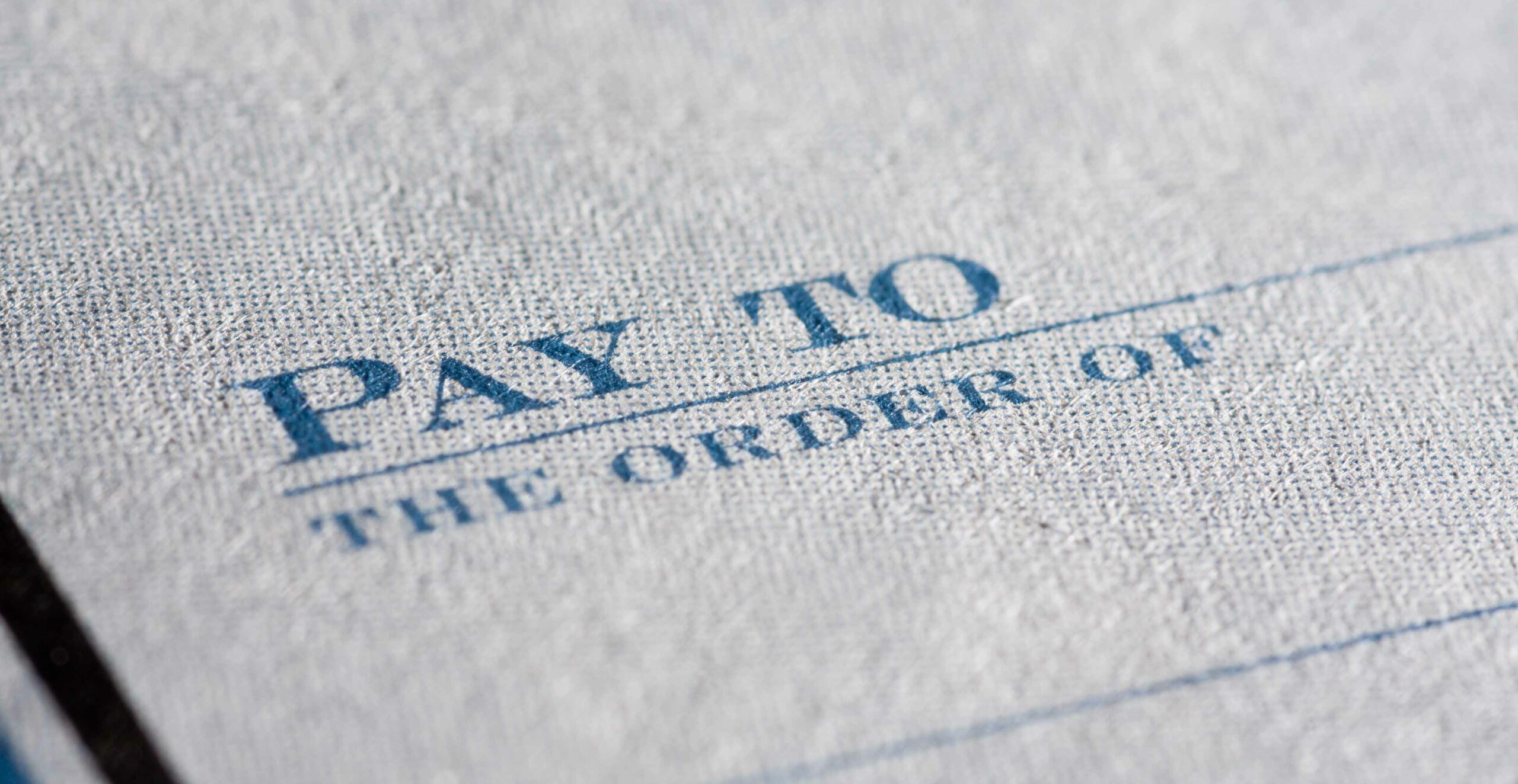
Although small in appearance, the payee line on a check represents one of the most critical components of payment security.

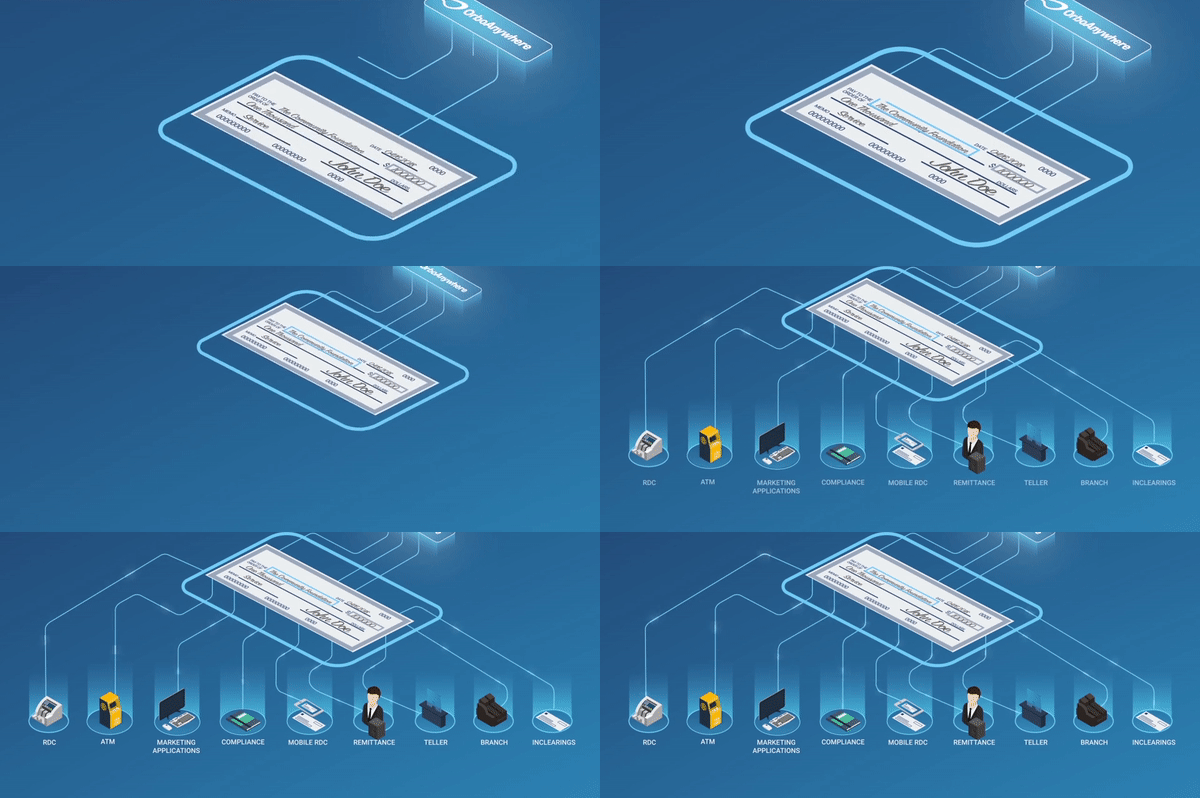
To counter fraudsters, financial institutions are deploying advanced technology solutions to detect payee alterations. OrboGraph’s Anywhere Payee is one such tool designed to strengthen payee-level validation through artificial intelligence. Leveraging OrboGraph’s OrbNet AI technology, Anywhere Payee accurately reads and interprets the payee field on both personal and business checks. Next, it compares the extracted payee name against internal payment records, authorized payee lists, or other reference data to identify discrepancies that may indicate tampering.
Anywhere Payee integrates seamlessly into remote deposit workflows. By validating the payee name before a mobile or ATM deposit is accepted, banks are able to intercept suspicious items early in the process. This capability significantly strengthens fraud defenses in deposit channels that traditionally receive limited human inspection.
Taking it further, financial institutions can leverage analyzers such as Writer Verification, which deploys image forensic AI technologies to interrogate the payee field for subtle changes such as handwriting inconsistencies, inconsistent spacing, location, as well as font mismatches and sizes. Where manual review might overlook small inconsistencies, AI-based models can identify patterns that correlate with known fraud techniques, including washed or digitally altered checks.
Strengthening payee field protection allows banks to significantly reduce check fraud exposure, enhancing trust in one of the oldest -- yet still widely used and relied upon -- payment instruments.