Citizens 2026 Payment Trends Report: 67% of Midsize Business are Concerned About Fraud
- Midsize businesses are modernizing payments while checks remain part of the mix.
- Real-time monitoring, AI, and layered controls are reshaping fraud prevention.
- Financial institutions can help stop suspicious checks before customers lose funds.
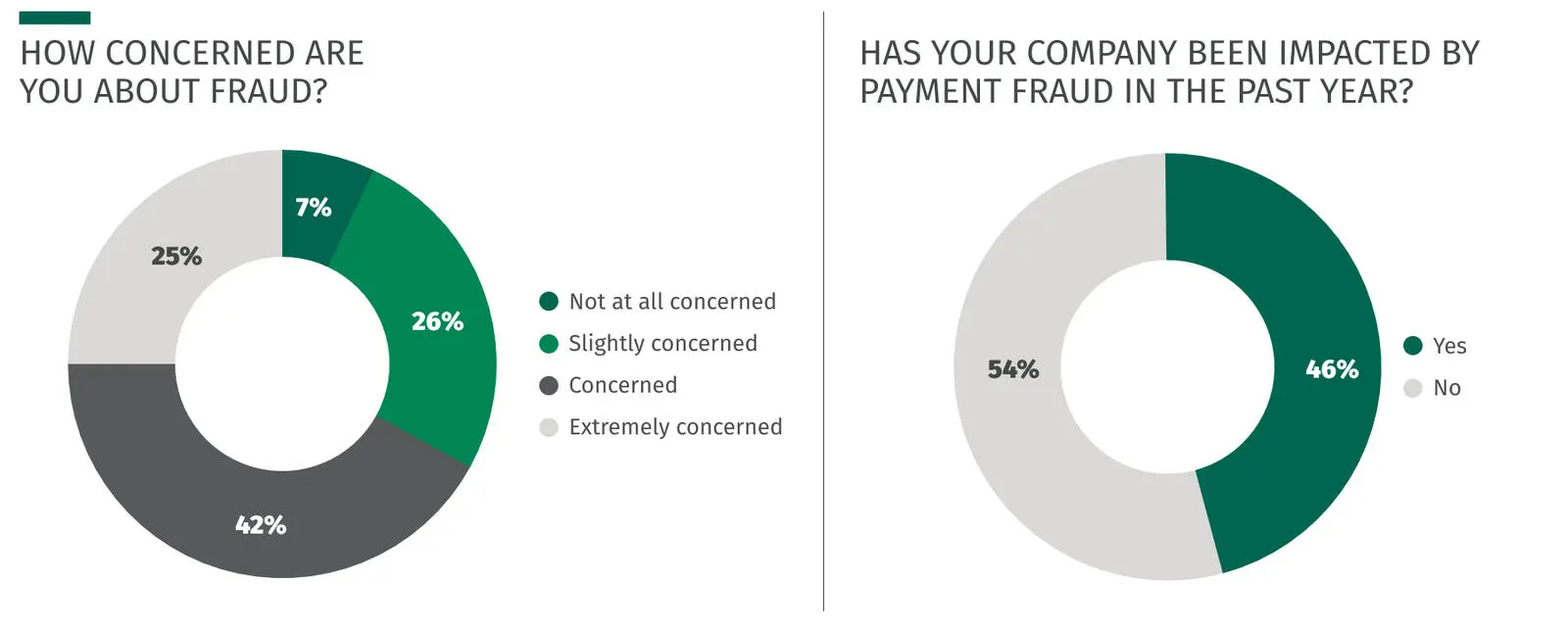
How are midsize business leaders feeling about fraud in 2026? According to Citizens' 2026 Payment Trends Report, 67% of respondents say they are concerned about fraud, and 46% say their company was impacted by fraud in the past year.
Source: Citizens 2026 Payment Trends
The report offers a useful snapshot of how midsize companies are approaching payment strategy, treasury operations, and fraud prevention. Citizens surveyed more than 300 financial decision-makers at non-banking companies with annual revenues between $5 million and $1 billion, highlighting how organizations are balancing payment modernization with day-to-day operational needs. The study was conducted between March 24 and April 2, 2026.
Checks Remain a Major Payment Method
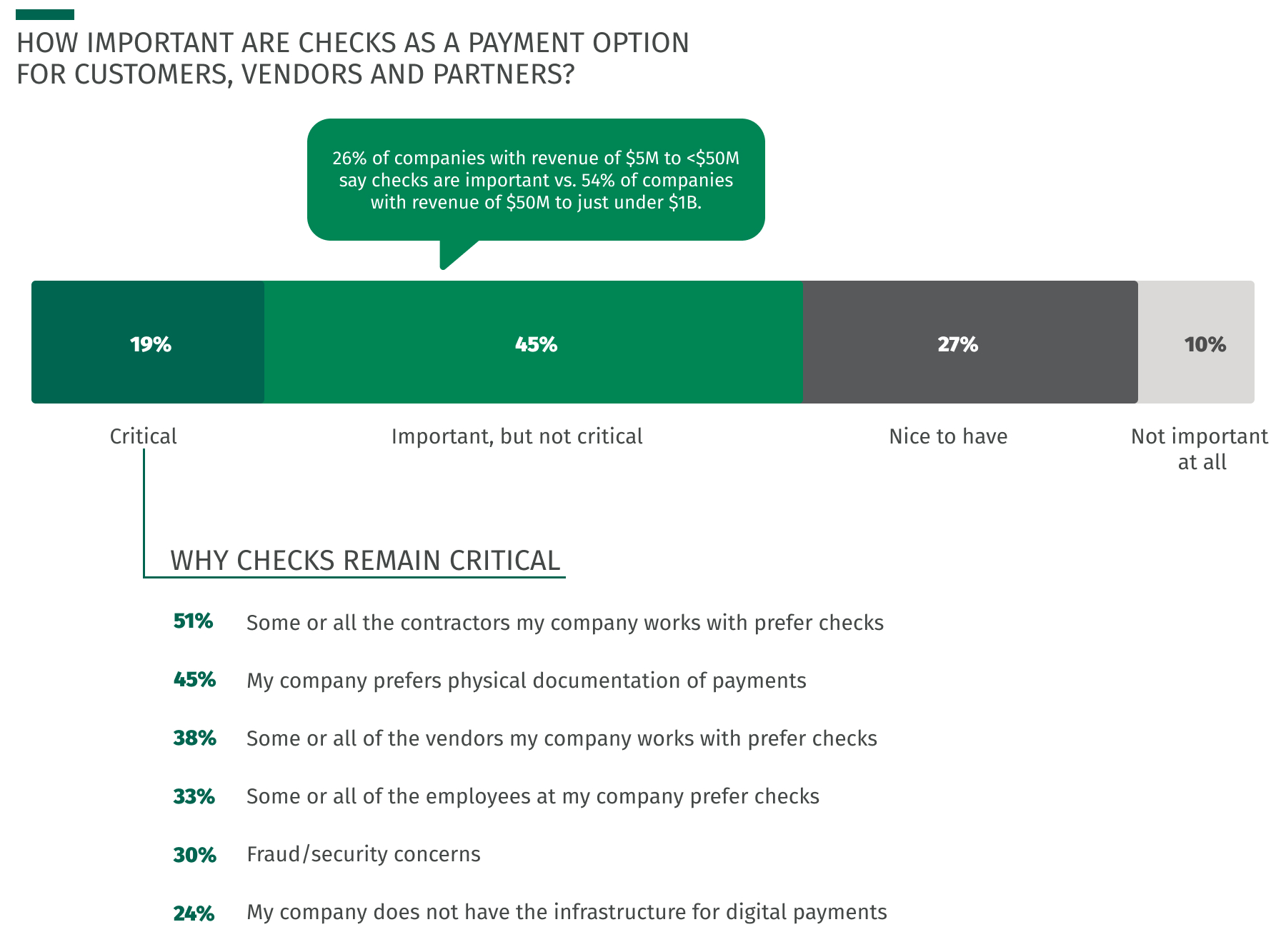
While many industry observers continue to predict the decline of paper checks, midsize businesses still see them as an important part of the payment mix. Citizens reports that although only 19% of respondents view checks as a critical payment option for customers, vendors, and partners, 64% say checks still provide value for that purpose.
The report points to several reasons checks continue to persist. Among respondents who said checks are critical, 51% cited contractor preference and 38% cited vendor preference. More broadly, businesses also continue to value checks for documentation, familiarity, and operational flexibility.
Source: Citizens 2026 Payment Trends
Tackling Fraud with Technology
The report shows that midsize businesses are leaning on technology to strengthen fraud prevention. Citizens says real-time fraud monitoring and two-factor authentication are the most widely used fraud mitigation methods in 2026.
According to the survey data you included, companies are using a mix of tools and controls, including:
- 58% of respondents leverage real-time fraud monitoring
- 57% of respondents leverage two-factor authentication
- 43% of respondents leverage machine learning/AI
- 42% of respondents leverage positive pay
- 42% of respondents leverage ACH positive pay
Additionally, 46% of respondents are actively providing training to their staff.
One of the more interesting findings is the decline in reported use of machine learning and AI for fraud mitigation. Citizens says reported usage fell from 58% in 2024 to 51% in 2025 and 43% in 2026. Even so, companies using machine learning and AI reported lower fraud incidence: 40% said they were impacted by payment fraud in the past year, compared with 46% across the full survey population.
"The apparent decline in reported use of AI and machine learning for fraud mitigation may be misleading, as modern real-time monitoring relies heavily on these technologies. As midsize businesses increasingly outsource fraud prevention, they have less visibility into how these tools work, leading to under recognition of their impact.”
What many midsize businesses may not realize is that their financial institution may already be using AI-powered fraud solutions, including Anywhere Fraud and Anywhere Deposit Fraud, to help protect them against counterfeits, forgeries, and alterations. The most effective fraud prevention happens when financial institutions stop suspicious items proactively, before their customers ever lose funds.