OrboNation Newsletter: Check Processing and Fraud – July 2026

Checks Aren’t Going Away. And That’s Not a Bad Thing.
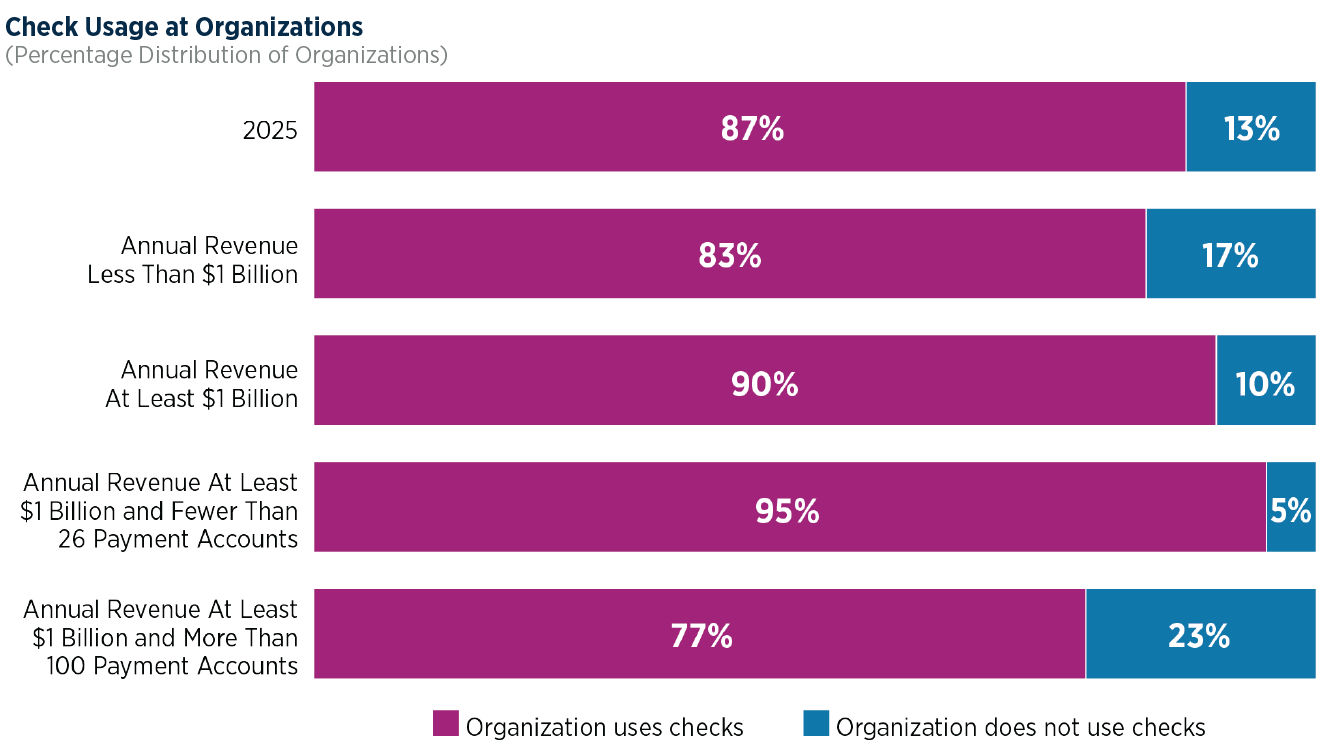
Every few years, someone in the payments industry declares the paper check dead. And every few years, the data disagrees. According to a study from the Atlanta Federal Reserve, as much as 83% of small firms with up to $10 million in annual revenue and 80% of “very small” firms with up to $1 million in revenue still use paper checks.
Additionally, according to the latest AFP survey, 72% of organizations that use checks plan to continue doing so for the foreseeable future.
So instead of planning around a checkless future, it’s worth asking a better question: why do small businesses — the backbone of the economy — keep reaching for the checkbook, and what does that behavior actually tell us?

Agentic AI: Rethinking Check Fraud Review

For years, financial institutions have fought fraud by adding more rules, more alerts and, inevitably, more analysts. As transaction volumes increased and fraud tactics evolved, the operating model remained largely the same: systems generated alerts, and investigators manually worked through them one by one. Success depended less on the intelligence of the platform than on the size of the compliance and fraud operations teams.
Do Fraudsters Ramp Up Check Fraud Activities Seasonally?
Fraud rarely stands still. It follows volume, behavior shifts, and operational blind spots. Even as digital payments continue to expand, checks remain a profitable target because seasonal surges create natural camouflage for bad actors. ICBB notes that check fraud remains a $21 billion problem, and for community banks the threat is not static; it moves with the calendar as fraudsters exploit holidays, tax deadlines, and emergency cycles to blend in with legitimate activity.

Money Mules: The Human Layer Powering Check Fraud

Money mule activity is no longer a side issue limited to money laundering teams. It now supports a broad range of scams, including identity fraud, payment fraud, and organized financial crime, because mule accounts give criminals a way to receive stolen funds and move money quickly across institutions.
The Government’s Anti-Fraud Push Is Real…But How Effective Will It Be?
Financial fraud has exploded over the past several years, growing not only in volume but in sophistication. Consumers, businesses, government agencies, and financial institutions are all dealing with a threat environment that moves faster, scales wider, and adapts more quickly than traditional controls were designed to handle. What once looked like isolated fraud events now resembles an industrialized ecosystem powered by stolen data, synthetic identities, organized mail theft, social engineering, and increasingly, artificial intelligence.
Check fraud has become one of the clearest examples of that escalation. Even as overall check usage declines, criminals continue to target the paper payment channel because it still presents opportunity: checks can be stolen from the mail, washed, altered, counterfeited, fraudulently endorsed, and deposited across multiple channels before victims or institutions have time to react.

How Fintechs and Financial Institutions Are Using AI to Fight Smarter

Financial fraud is not standing still — and neither can the organizations trying to stop it. A recent FinTech Magazine article featuring Experian’s Paul Weathersby highlights what many in the industry are already seeing firsthand: fraud is becoming more automated, more scalable, and more difficult to detect with traditional tools alone.
Big Banks Are Already Using Agentic AI. Is Your FI Ready For It?
Agentic AI has quietly moved from concept to deployment at the largest banks in the country. A recent KPMG survey found that just over half of banks are now piloting AI agents and the pilots aren't just small experiments.

Are You Still Running “SPF 15” Check Fraud Protection?

Summer is here, and everyone is talking about SPF. But, while your accountholders are thinking about sunscreen, fraudsters are turning up the heat on your check channels. Advanced Fraud Solutions recently posed a smart question: “What’s your fraud SPF?”—a metaphor for how well protected financial institutions really are in today’s fraud climate.
What Is Really Stopping Adoption of Real-Time Payments
The industry has been proclaiming the benefits of real-time payments, and how they will be the "death of checks." However, for all the perceived and proven benefits -- including speed, cashflow, revenue recognition -- adoption has been slow. So, why is it that traditional payments like checks still dominate B2B payments?
The US Government Addressing Funds Availability with the STOP Payments Fraud Act

PYMNTS recently highlighted a new House bill that could quietly change the way financial institutions fight check and wire fraud: Rep. Young Kim’s STOP Payments Fraud Act. The proposal would allow banks to place extended holds on suspicious checks and wire transfers while potential fraud is investigated—addressing a long standing tension between rapid funds availability and practical fraud risk management.
The Real Cost of Bad Data Isn’t Mistakes. It’s What Never Happens.
Every transaction processed, every check deposited, every loan application submitted generates data. Financial institutions sit on one of the richest data assets in any industry. But volume isn’t the same as value and bad data doesn’t just create errors. It creates silence where there should be signal. The real danger isn’t what goes wrong. It’s what never happens at all.