Is Social Media Resurrecting Check Kiting?
- Social media is promoting a "deposit hack"
- This "deposit hack," unfortunately, is simply check kiting
- Consumers must be careful about financial advice via non-credentialed sources
Social media is known for resurrecting old trends, bringing nostalgia to the older generations and exposing them to the newer generations. Unfortunately, social media appears to be resurrecting some old fraud schemes as well, disguising them as "money hacks."
Earlier this month, the FTC issued a warning regarding a popular "social media trend that’s actually bank fraud." The scam begins with an instructional video or post that outlines an “opportunity” to make money using checks:
The supposed hack involves writing a check for more money than you have, depositing it into a different account of yours, and then withdrawing the money before the (bad) check is fully processed. What the video or post might not tell you is that could leave you on the hook for paying back all the money, kicked out of your bank, and in serious legal trouble for bank fraud.
WBTV in Charlotte, NC recently did a report on the scam, uncovering what is essentially Check Kiting:
Can You Trust Social Media "Money Hacks"?
So - can social media suggest effective "money hacks"?
Unfortunately, the answer is complex. There are many legitimate content creators with accreditations that do indeed provide valuable tips. However, viewers should do their own research, particularly if the phrase "money hack" is deployed, or "making quick money" is promised.
We recently saw a similar social media trend labeled the "infinite money glitch" scam, where individuals were encouraged to write a check to themselves for a large amount, deposit the paper check into their Chase account via ATM, and then exploit a vulnerability in the ATM system to withdraw all those funds. Unfortunately, there were many people who rushed to the ATMs and are now suffering the consequences as banks continue to go after each individual to recoup the funds.

This was not the only time Check Kiting was resurrected, as Fidelity addressed a similar situation by slashing deposit limits via mRDC.
The FTC notes that individuals should perform the following before jumping in on these "money hacks":
- Do some research. Search the trend along with terms like “scam” or “fraud” to see what others are saying about it. Talk to friends and family to see what they think.
- Think about the source. What do you know about the person or account that makes them trustworthy?
- Compare advice from a variety of well-known sources. Don’t just trust what one person or account says.
How Financial Institutions Can Address the Issues
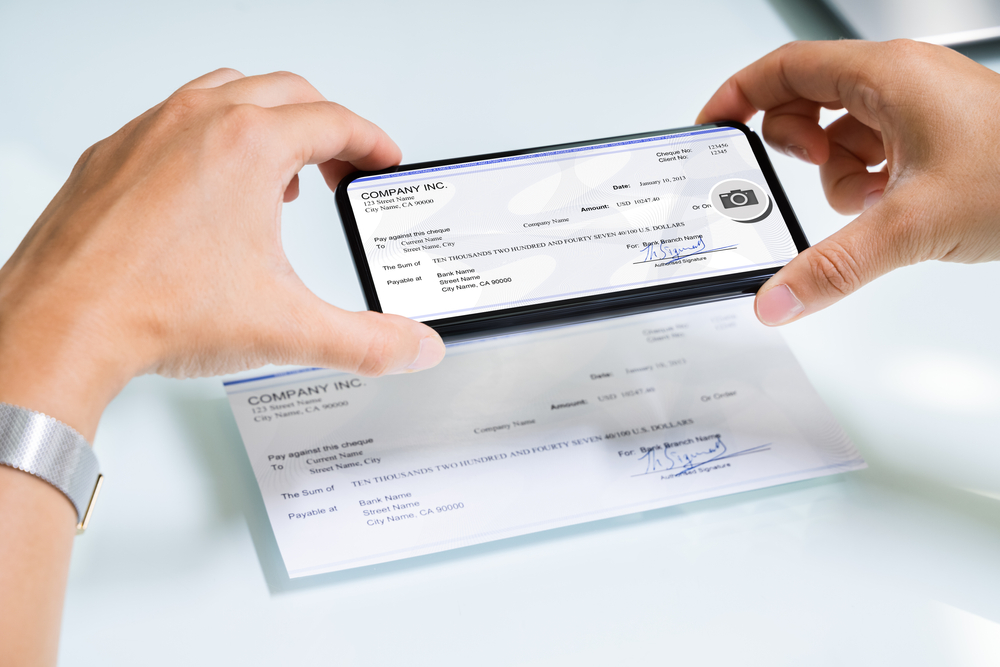
Many of these money hacks are forms of deposit fraud, where fake checks, or in this case legitimate checks with insufficient funds, are deposited into individual accounts. Ensuring that your bank has strong funds availability policies in place is the first recommendation.
Additionally, financial institutions need to deploy technologies like Anywhere Deposit Fraud to validate check deposits. The technology was developed specifically to identify fraudulent checks deposited in any deposit channel, most typically at the bank of first (BoFD). Anywhere Deposit Fraud utilizes a sophisticated multi-layer approach which can be integrated into existing fraud platforms, or run independently. Each layer provides an added level of protection for the financial institution by analyzing different aspects of the deposit check item -- ensuring that even if the fraudulent check was not caught in one layer, others are able to flag the item.
Finally, financial institutions should leverage social media to communicate with their customers. This channel can not only help protect their depositors from falling for these schemes, but also boost the financial institution's consumer-friendly reputation.