Reliance on Traditional Positive Pay Puts Corporate Clients at Major Risk
- Traditional Positive Pay misses altered checks when payee-name verification is absent.
- Criminals exploit check washing and altered payees to bypass legacy controls
- Enhanced Positive Pay, field validation, data consortiums, and dark web monitoring strengthen defenses
A post by Erin Teta, Director of Cerini & Associates, warns that Traditional Positive Pay is not foolproof: if payee-name verification is not enabled, altered checks can still clear even when you transmit a full issue file. She describes a case where a school district mailed a check that was intercepted, the payee line was altered, and yet the item cleared the bank despite Traditional Positive Pay and a complete issue file being in place.

The reason: Traditional Positive Pay configurations match only the check number, date, and amount, not the payee name, allowing any check that preserved those three data points to be paid. Many business officials assume that including a payee name in the transmitted file means the bank is validating it, but payee matching (Payee Positive Pay) is often a separate, add‑on service -- or not available at the financial institution.
Types of Positive Pay
For those who are unfamiliar or new to the check fraud industry, it should be noted that there are actually several types of Positive Pay solutions available in the market, including:
- sCheck Positive Pay (Traditional): Enables banks to compare certain fields of the check to the issuer file, including serial number, amounts, and date.
- Payee Positive Pay: Enables banks to compare the payee to the issuer file, along with the other standard fields. This is particularly effective for altered checks.
- Reverse Positive Pay: A standard report is created with data extracted from the check and sent to the corporate client for transaction verification.
- ACH Positive Pay: Monitors ACH debit activity and sends alerts for unauthorized or potentially fraudulent transactions based on a set of rules or parameters.
As noted earlier, payee matching may not be available at all because the financial institution is deploying traditional Positive Pay -- which, unfortunately, has its flaws. Traditional Positive Pay ignores payee names which are highly exposed to check washing or alterations, where criminals remove the original payee and substitute their own while leaving numbers and amounts intact.
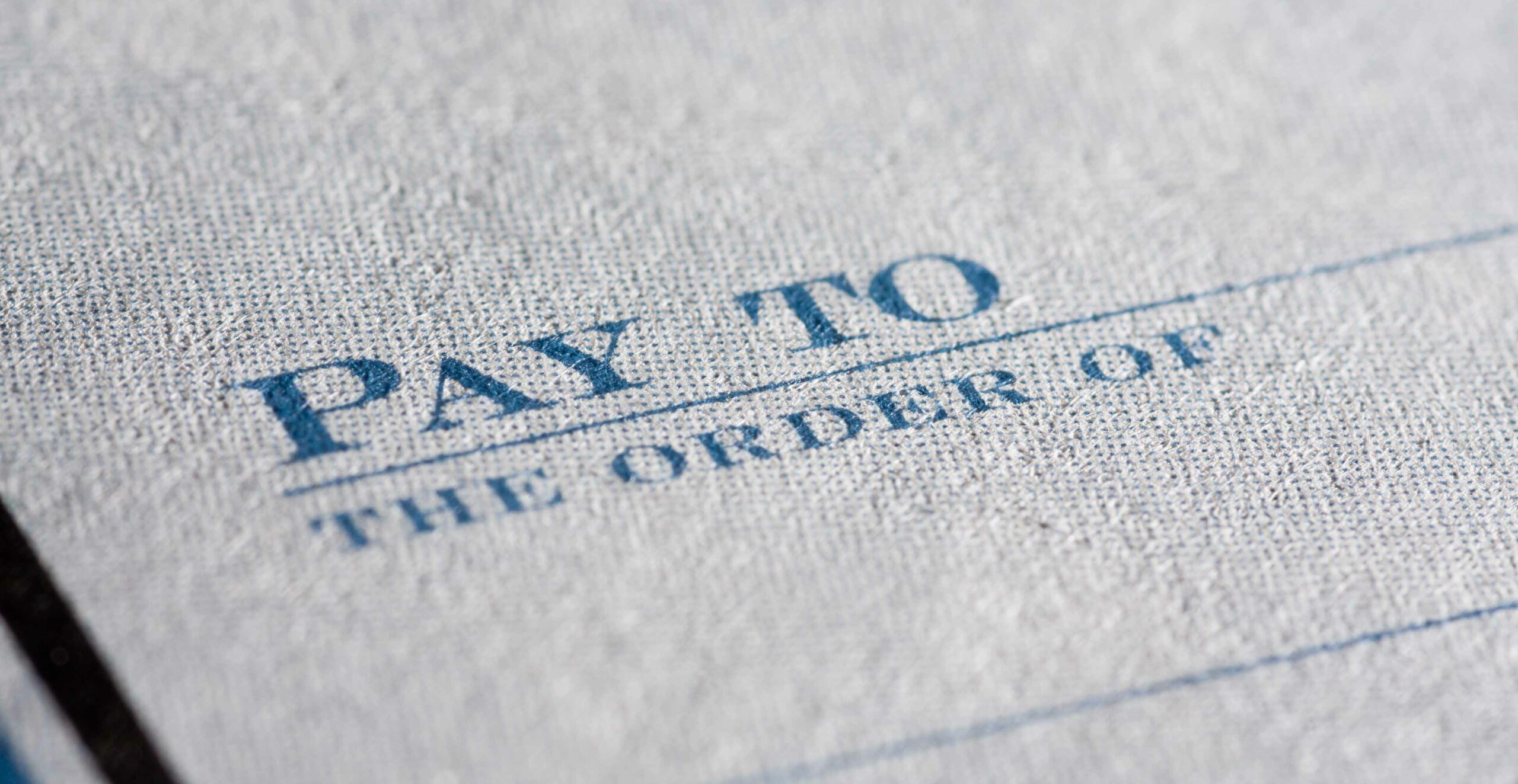
A simple Google search can yield hundreds -- if not thousands -- of real life examples where fraudsters simply wash or alter the payee line to get away with thousands of dollars.
Supercharging Positive Pay
Fortunately for financial institutions -- and their commercial customers -- There are several new technologies able to provide positive pay systems with major boosts, essentially "supercharging" positive systems for FIs and their corporate clients.
Payee Positive Pay: Advancements in optical character recognition and payee matching have revolutionized Positive Pay systems, allowing a comprehensive approach that matches the payee name to payee issue file source, building a strong deterrent to payee alterations.
Field Validation: New technologies enable FIs and their corporate clients to validate additional fields like signature, date, and payor to provide a more robust fraud-detection process.
Consortium Data: Positive pay systems are receiving a boost from consortium data. As noted in a previous article, technology vendors like AFS are able to take the extracted data and compare it to their consortium data to provide extra protection from check fraud.
Dark Web Monitoring: Many stolen checks end up on the dark web or other channels like Telegram. Deploying a dark web monitoring solution scours these channels to detect compromised checks or accounts -- putting FIs in a proactive position as they fight check fraud.

As fraudsters refine their tactics and techniques, financial institutions cannot rely on decades old technologies to combat them.