Payment Modernization: Bad Data or Disconnected Systems?
- Legacy systems often fail due to disconnected data, not poor-quality data alone.
- Orchestration unlocks AI value without replacing trusted legacy systems.
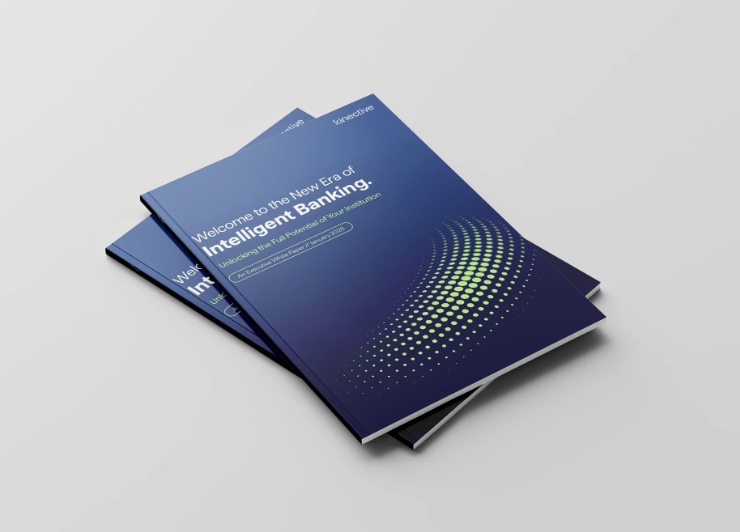
- Intelligent Banking is key for activating payments data to make smarter decisions.
One major issue plaguing financial institutions is data integrity. However, is it actually "bad data," or are FIs unable to connect legacy systems and leverage the data properly?
That’s the central message from Mladen Vladic of FIS in a recent PYMNTS discussion, and it hits squarely at the heart of today’s payments modernization agenda. For financial institutions, the question is no longer whether to use AI, but whether the underlying data and infrastructure can support it.

Legacy Systems as Strategic Assets
Vladic argues that legacy systems deserve a second look, not a death sentence. Core payment and banking platforms have been battle-tested for decades, built to handle massive transaction volumes with high levels of trust, resiliency, and regulatory compliance.
Rather than pursuing risky rip-and-replace strategies, he advocates for “orchestration”; in other words, connecting legacy cores, modern digital layers and partner technologies so that data flows seamlessly across the enterprise. In this model, the legacy stack becomes a foundation, not a bottleneck, for AI-driven payments innovation.
The real obstacle, according to Vladic, is fragmented data locked in silos that were never designed to talk to each other. Banks often have rich archives of payments data spread across check processing, ACH, wires, cards, and emerging channels. However, these repositories are frequently disconnected, inconsistent and difficult to access in real time. AI models trained on incomplete, dirty or duplicated data underperform — not because the algorithms are weak, but because “AI is only as good as the data available to feed these models.”
Intelligent Banking -- Connecting Systems for Actionable Data
For banks and credit unions, the winners in this next phase of payments innovation will be those that connect systems, partners, and technologies into a coherent whole while preserving trust at every step.
Bottom line: By focusing on data quality, orchestration and long-term partnerships, institutions can turn their legacy systems into strategic assets and unlock the full potential of AI in payments.
Technologies like OrboAnywhere, powered by OrbNet AI, not only automate check processing and payment validation, but also create a wealth of data critical for financial institutions' overall business operations. Rather than leaving this data sit siloed, many banks are turning to Intelligent Banking -- applying advanced technologies and AI to activate data that banks and credit unions have been collecting for years. This enables them to turn the data into smarter decisions, more personal experiences, and the ability to serve consumers in ways that simply weren’t possible before.
As financial institutions modernize, they should avoid simply "ripping and replacing" older technologies with newer ones. Instead, they should evaluate their existing systems and connect them in ways that enable better, smarter decisions for both the institution and its customers.