OrboNation Newsletter: Check Processing and Fraud – March 2026

OrboGraph Publishes New Analysis of Suspicious Activity Reports (SARs) Trends
For years, the industry relied on the American Bankers Association’s (ABA) Deposit Account Fraud Survey as the central source for fraud trends. However, with the last report being published back in 2020 based on 2018 data, the industry has relied on SARs as a benchmark for fraud trends for the past 5+ years, particularly when it comes to check fraud.
As part of our commitment to the industry, OrboGraph has a published a new report analyzing Suspicious Activity Reports (SARs) filed by U.S. depository institutions -- highlighting the important shifts and trends in fraud between 2024 and 2025.
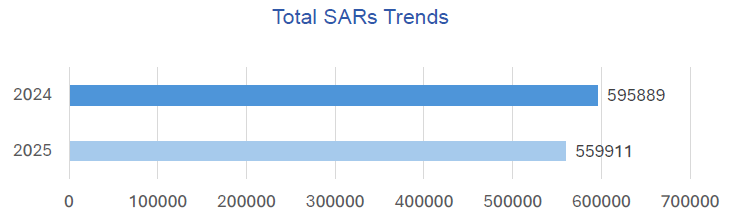
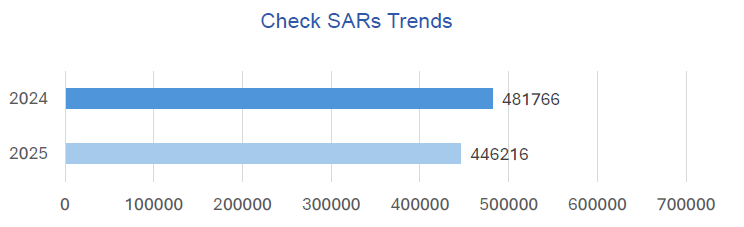
Total SAR filings declined modestly from 595,889 in 2024 to 559,911 in 2025, representing a 6% overall reduction. While this decrease may suggest some progress in fraud mitigation, the underlying data shows that check fraud continues to dominate suspicious activity reported by financial institutions.
Recent $1.7M Mail-Theft Ring Busted: Superb Investigation or Pure Luck?
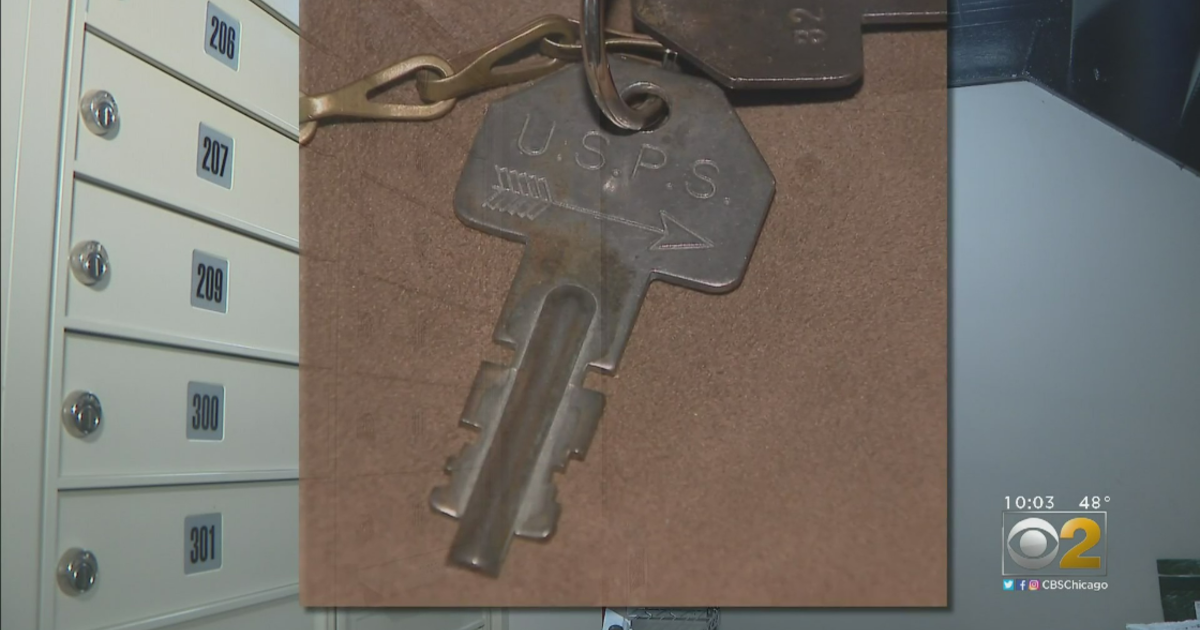
Recently, we posted a blog on the topic of lower prison sentences for financial crimes -- one of the reasons many organized criminal rings have adopted check fraud as a major revenue stream within their operations. However, a new article posted on FedWeek provides insights into a recent $1.7M mail-theft bust and how this may not be as big a win as it would appear.
54% of FIs Partnering with Fintechs for AI Deployment and Banking Modernization
For far too long, banking institutions relied upon outdated, legacy technologies and systems. Unfortunately, these have become incompatible with today's fast-paced industry where financial institutions must continually adapt to the needs of their customers and keep up with their competition. And, much of the challenge centers around the adoption of artificial intelligence.

Are Fraudsters Targeting Specific Types of Companies?

Analysis of the types of checks being sold on the dark web and encrypted platforms like Telegrams reveals that some types of checks were seen as more valuable than others. As we noted a few years ago, personal checks typically sell for around $175, while business checks go for $250. This shows that fraudsters put a higher value on business checks, most likely because the accounts tend to have higher balances.
OrboGraph Wins 2026 Artificial Intelligence Excellence Award in Fraud Detection and Prevention
Recognition honors measurable impact in combating check and deposit fraud through advanced AI
BURLINGTON, MA – March 26, 2026 – OrboGraph is pleased to announce it has been named a 2026 Artificial Intelligence Excellence Awards winner in the category of Fraud Detection and Prevention. Presented by the Business Intelligence Group. The award recognizes organizations, products, teams, and individuals that are applying artificial intelligence in ways that drive real, measurable impact.
The 2026 Artificial Intelligence Excellence Awards honor achievement across a broad range of industries and use cases, spotlighting the companies and leaders moving AI beyond experimentation and into practical, accountable deployment. This year’s program recognized winners across 36 industries and more than 15 countries.

Investment in Hardware/GPU: No Longer a Barrier for AI Check Fraud Detection

With the surge of check fraud over the past decade, we have seen more and more financial institutions transition from traditional rules-based to AI-powered check fraud detection. AI‑powered check fraud detection solutions such as OrboGraph's Anywhere On-Us Fraud and Anywhere Deposit Fraud leverage the technology to not only increase detection of counterfeits, forgeries, and alterations, but also reduce the latency -- making fraud operations more efficient.
Safeguarding Federal Reserve Check Services: A Call to Community Banks
The Independent Community Bankers of America is calling on community banks to speak up as the Federal Reserve weighs the future of its check collection and processing services. At stake is whether Reserve Banks will continue to provide critical functions that many smaller institutions rely on as their primary—or even sole—check-processing option.

US Government Finally Taking Meaningful Actions to Fight Fraud…Will It Work?
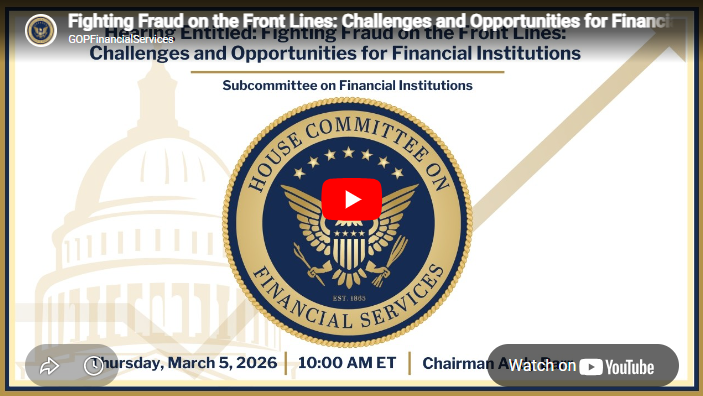
On March 5, 2026, the industry saw banking executives appear in front of the United States House Committee on Financial Services for a hearing, aptly entitled “Fighting Fraud on the Front Lines: Challenges and Opportunities for Financial Institutions,” to discuss the meteoric rise in cybercrimes and fraud.
SEON Report: The Value of AI in Fraud and AML Increasing
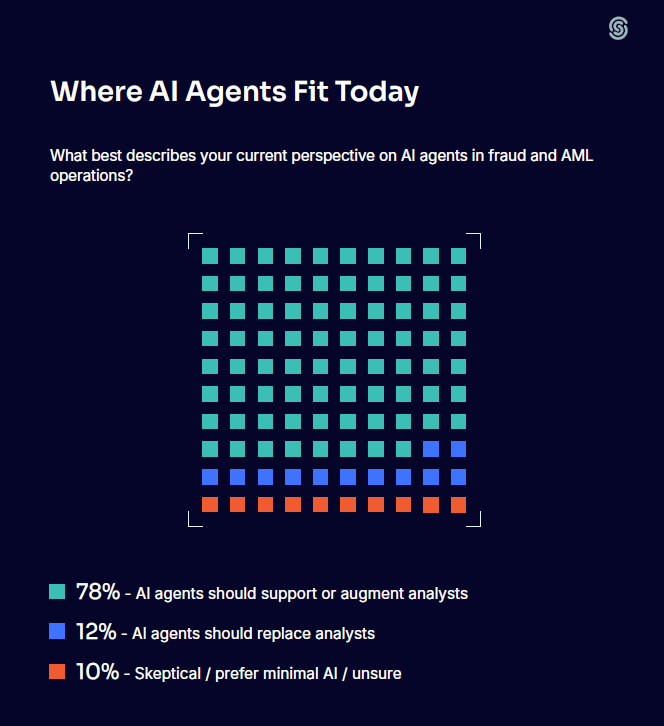
In the recently published report entitled AI Reality Check, 2026 Fraud & AML Leaders Report, SEON --a prominent fraud and AML platform -- underscores the pivotal role of artificial intelligence (AI) in revolutionizing fraud prevention and anti-money laundering (AML) operations. With 98% of organizations already integrating AI into their workflows, AI has become a foundational element in combating fraud.
Visa/Featurespace Details How Fraudsters Use AI to Mass-Produce Checks

In a new PYMNTS post, Visa’s Michele Herron warns that even as digital payments accelerate, old-fashioned checks remain a massive liability — driving nearly a third of U.S. fraud losses and proving 31 times more likely to be fraudulent than real-time payments.
Why Small Businesses Still Rely on Paper Checks
For years, the industry relied on the American Bankers Association’s (ABA) Deposit Account Fraud Survey as the central source for fraud trends. However, with the last report being published back in 2020 based on 2018 data, the industry has relied on SARs as a benchmark for fraud trends for the past 5+ years, particularly when it comes to check fraud.
