OrboNation Newsletter: Check Processing and Fraud – February 2026

Are Financial Institutions Ready to Shift from Automation to Cognitive Enterprise?
A recent article published on Forbes.com takes a look at the evolution of technology from simple banking automation to a cognitive enterprise model where AI learns, reasons, and collaborates with people across the organization. The focus is no longer just on speeding up manual tasks but on building an intelligent ecosystem where data, workflows, and human judgment operate in concert.
Author Sanjoy Sarkar, SVP, Senior Director - Application Development & Support at First Citizens Bank, notes that evolution from early rule-based RPA, which handled repetitive work, to workflow and low-code platforms that extended automation across back-office and customer-facing processes. Today’s “cognitive enterprise” goes further, using anomaly detection, natural-language understanding and decision engines to anticipate needs and recommend next best actions, augmenting how humans think rather than simply replicating what they do.

Reliance on Traditional Positive Pay Puts Corporate Clients at Major Risk

A post by Erin Teta, Director of Cerini & Associates, warns that Traditional Positive Pay is not foolproof: if payee-name verification is not enabled, altered checks can still clear even when you transmit a full issue file. She describes a case where a school district mailed a check that was intercepted, the payee line was altered, and yet the item cleared the bank despite Traditional Positive Pay and a complete issue file being in place.
The Dangers of Social Media: How Scrolling Leads to Check Fraud
Spending a lot of time on social media? Well, you could be setting yourself up for check fraud.
Recently, we noted that 54% of U.S. consumers reported an increase in check fraud attempts in 2025. Could your scrolling on popular social media apps like Facebook, Instagram, X, or TikTok be putting yourself at risk?

AI Automation a Top Banking Trend in 2026

For decades, the banking industry has been chasing the elusive goal of automation -- alleviating their internal teams from laborious tasks and shifting to strategic tasks that drive revenue. According to a new article from Startus Insights, the industry appears to be at the nexus point as financial institutions are deploying more AI technologies that can achieve true automation.
Are Tougher Prison Sentences the Solution for Check Fraud?
One often ignored factor that help drive the surge in check fraud is the fact that the punishment for committing check fraud -- from stealing check to actually stealing funds -- is relatively low compared to other felonies. As noted by James Bi, Marketing Manager and Check Fraud Detection Specialist at OrboGraph:
In general, financial crimes receive lower prison time than other felonies that criminals previously perpetrated. Individual criminals and organized crime rings were aware of this and made perpetrating check fraud a part of their operations as it was seen as a much lower risk than other crimes that carry more than a decade in prison.

Featurespace Report: 54% of U.S. Consumers Report an Increase in Check Fraud Attempts in 2025
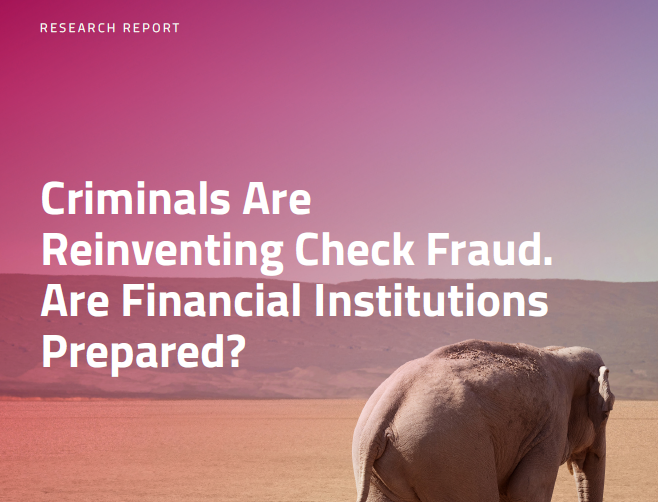
For #FraudFighters across the U.S., data has become a major weapon against fraudsters -- as they say, knowledge is power! Featurespace, a trusted partner of OrboGraph, announced via LinkedIn a new report entitled Criminals Are Reinventing Check Fraud. Are Financial Institutions Prepared (downloadable in PDF form) to provide financial institutions new data on check fraud.
Mastercard: Early Adopters of AI-Driven Fraud Detection See 2X Cost Savings
AI is rapidly reshaping the fraud landscape, and a Mastercard.com post argues that banks can no longer afford to treat it as a “nice to have” in their fraud prevention strategy. While generative AI is supercharging deepfakes, synthetic identities, and impersonation scams, the same technology is enabling financial institutions to detect and stop fraud in real time, cut manual workloads, and protect customer trust at scale

Blank Check Stock: The Quiet Upstream Engine of Modern Check Fraud

Blank check stock has become one of the easiest “upstream” tools for check fraudsters to obtain and weaponize, turning ordinary office supplies into high‑yield crime infrastructure.
In a recent LinkedIn post, David Maimon, Professor at Georgia State University and Head of Fraud Insights at SentiLink, calls blank check stock a “critical upstream asset in the check fraud ecosystem.”
Scam Detectors Podcast: The History of Check Fraud is as Old as Checks
Did you know the concept of "checks" goes way back thousands of years? According to a blog post from Superior, back as early as 3000 B.C., merchants in ancient Babylon utilized clay tablets as "a primitive form of a promissory note, functioning much like a check does today." For the US, checks were first written 1680's by Boston businessman who mortgaged their land and other holdings and wrote checks against the money.

Should Banks Incentivize Front-Line Staff to Catch Check Fraud?
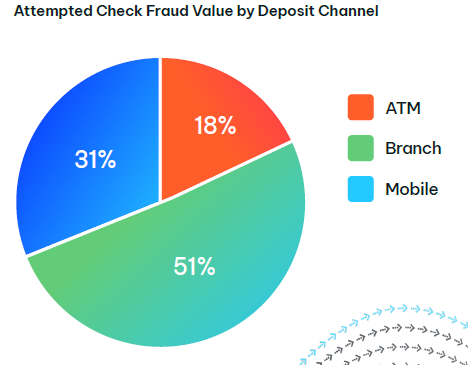
Solving the challenge of check fraud is not just an investment in technologies, it is an investment in your front-line staff. While many would think that check fraud would mostly occur at deposit channels where the fraudster or money mule can avoid being face-to-face with a bank employee, that is not the case according to a report from NICE Actimize. In fact, 51% of attempted check fraud is at the bank branch.
FED Receiving Major Pushback on Eliminating Check Clearing Services
Over the past handful of years, we've seen so-called industry experts and pundits, along with mainstream media, announce that "checks are dead." Yet, for those who are actually in the industry and handle check processing daily, the observable truth is that checks remain a major payment channel that continues to persist.
