OrboNation Newsletter: Check Processing and Fraud – April 2026

Kinective Acquires OrboGraph, Adding AI-Powered Check Fraud Prevention to Banking Operations Platform
PHOENIX (March 31, 2026)—Kinective, the company delivering intelligent banking to over 4,000 banks and credit unions every day, today announced its acquisition of OrboGraph, an industry-leading provider of AI-powered check recognition and fraud prevention solutions.
The acquisition marks Kinective's strategic entry into AI-driven check fraud prevention—addressing one of the most critical challenges facing financial institutions and a top request from Kinective's customers. With check fraud surging 385% since the pandemic, the addition of OrboGraph's battle-tested technology delivers the advanced protection financial institutions require to safeguard their operations.

"This acquisition delivers the fraud capabilities our customers need now more than ever,” said Stephen Baker, CEO of Kinective. “OrboGraph brings more than three decades of AI and machine learning expertise purpose-built to detect check fraud wherever and whenever it occurs. Combined with our ability to monitor transactions across teller, ATM and digital payment channels in real time, we can help institutions better protect their customers and communities. This is the true power of our platform: turning data into action that makes banking more intelligent and secure."
How B2B CFO’s Need to Approach Fraud Edit

Fraudsters are known to be relentless in their search for vulnerabilities within any technology or process. Many financial institutions are keenly aware of this; however, the end-consumers generally are not -- particularly businesses.
In a recent PYMNTS.com article, CFOs are warned that no matter what method of payment they choose to utilize -- from digital payments to paper checks -- there are always inherent risks for each of them.
PaymentsJournal Podcast: Understanding the Effects of Fraud on Consumers
Financial fraud is no longer a rare event; for many consumers, it is a persistent risk that shapes how they interact with their financial institutions. The emotional fallout from scams–shame, fear, and loss of trust–directly influences customer behavior, and that behavior is precisely where banks and credit unions must focus to strengthen deposit fraud defenses.

Universal Acceptance Holding Digital Payments Back

A recent American Banker opinion piece argues that the U.S. is entering the decisive phase of its shift from paper checks to digital payments — and that the way this transition is managed will directly affect fraud exposure, operational risk, and customer trust for years to come. For bank fraud and operations executives, the core message is stark: check volumes are steadily declining.
AFP Survey: 58% of Organizations Report Experiencing Check Fraud in 2025
This week, The Association for Financial Professionals announced the release of their 2026 AFP Payments Fraud and Control Survey report. The report, underwritten by Truist, has been utilized by the industry as the benchmark for payments fraud -- including checks.
Findings from the 2026 survey show that payments fraud remains pervasive, with 76% of organizations reporting attempted or actual incidents in 2025. Although this marks a slight decrease from 2024, the overall risk environment remains elevated. Larger organizations—especially those maintaining fewer payment accounts—continue to face increased exposure: 66% of organizations with revenue exceeding $1 billion report fraud losses, while the percentage is only 48% of organizations with revenues under $1 billion.
Fintech-Credit Union Relationship: Overcoming the Misalignments

PYMNTS.com explores how credit unions once treated FinTech collaborations as side projects. However, now more than half say external partners are what allows them to innovate faster and at greater scale than they could on their own -- paralleling research from Finastra noting that 54% of financial institutions are turning to fintech partnerships to accelerate modernization and address skills gaps.
FRAML: What Full Integration Really Means for Check and ACH Fraud
A recent BankInfoSecurity article by Suparna Goswami highlights how scams now hit an estimated 57,000 Americans every day, pushing banks to tighten fraud controls and move toward near real‑time monitoring. The National Automated Clearinghouse Association's (Nacha) 2026 requirement for near real‑time ACH fraud monitoring is a key catalyst, forcing closer coordination between fraud and anti‑money laundering (AML) programs.

ABA Survey Confirms Banks are America’s Front Line Against Fraud
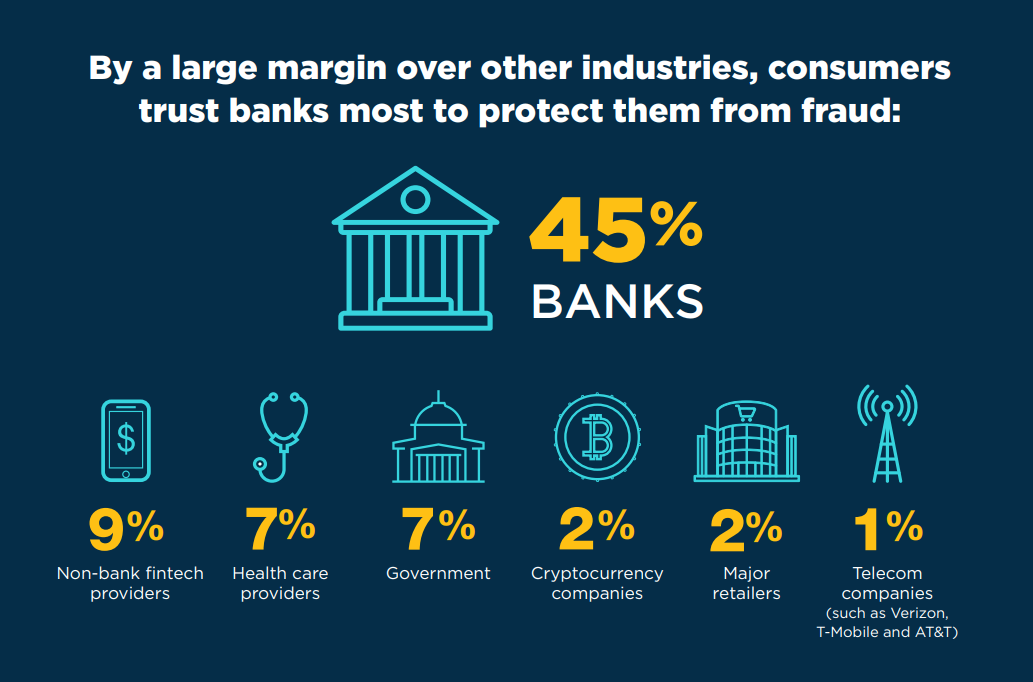
A new infographic -- based on research conducted by Morning Consult and published by American Bankers Association -- sends a clear message: Consumers still see banks as their most trusted defense against fraud—far more than any other industry. At a time when check fraud, scams, and payment fraud are accelerating, that trust is both a responsibility and an opportunity for financial institutions and their technology partners.
Is Modernizing Legacy Positive Pay Systems Enough to Stop Check Fraud?
Positive Pay, as currently deployed by many financial institutions, is stuck in a 1990s workflow that puts too much operational burden on business customers and keeps adoption stubbornly low, according to a recent LinkedIn article by Max Koenig, VP Sales & Partnerships at Monit. In “Positive Pay Hasn't Changed Since the 90s. That's a Problem,” Mr. Koenig notes that while fraud risk has exploded—driven in part by AI—core Positive Pay processes have barely evolved in more than 30 years.

Why Rip-and-Replace Method is Holding Financial Institutions Back from True Modernization

When thinking about the concept of platform modernization, many organizations take the age-old approach of rip-and-replace -- taking legacy solutions or systems and simply replacing them with something new. However, this is not the case. To truly achieve platform modernization, it means transitioning from legacy systems down to the core.
Visa/Featurespace: Why Banks Need a Connected Fraud Ecosystem That Includes Checks
In a recent interview, James Mirfin, SVP, Head of Risk and Security Intelligence Solutions at Visa, spoke with PYMNTS CEO Karen Webster about Visa’s network-level fraud strategy, which points to a future where banks, networks, fintechs and check processors must operate as a connected fraud ecosystem, not a collection of silos.
