Products

Wal-Mart — already equipped with its own credit and debit/prepaid cards — has in recent months partnered with Ribbit Capital to start a fintech. Payments Journal reports that they are also looking at more financial services offerings via a branded all-purpose mobile app. Wal-Mart certainly has the audience to compete with banks. As reported in Barron’s:

Billerica, MA, June 7, 2021 – OrboGraph, a premier developer and supplier of intelligent electronic and paper automation for check fraud detection, recognition solutions as well as healthcare payment electronification, announced the market launch of OrbNet Forensic AI as the core image analysis technology to the Anywhere Fraud software application version 4.1. Details are now available on recently modernized company’s website, www.orbograph.com.

Surprise! Barry McCarthy the CEO of Deluxe, is a proponent of checks as payment tools. Even with the pivot for consumers to digital payment options, business-to-business is still reliant upon an older payment method: checks. Yes, you read that right. Although check usage has decreased significantly since the mid-2000s, physical checks accounted for 42%of B2B transactions in 2019 despite the explosion of digital options.

We have receive a tremendous amount of positive feedback from our recent #OrboZone launch, with a countless number of clients, partners, and industry experts raving about their “experience.” But what is #OrboZone? It’s dynamic content that combines high-impact videos, visual galleries, energizing music, and entertaining activities for your WFH environment.

Here’s a paradox we enjoy seeing: Even as it’s proclaimed all over the place that “checks are in decline,” and “checks are alien to Millennials” — we see a forward-looking, technologically innovative payroll infrastructure startup system launch and call itself — Check.
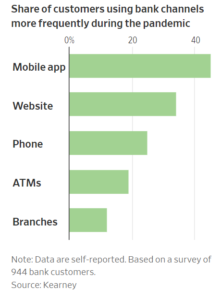
In a summary of Mercator Advisory Group’s new Insight Summary Report, 2020 Small Business PaymentsInsights, COVID-19 and B2B Payments & Cards – The Result of the Pandemic, PaymentsJournal.com summarizes their findings.
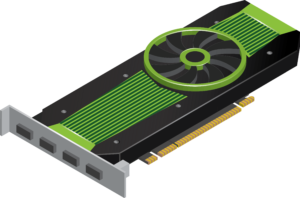
By now, many of you have heard of the arguments between utilize GPU vs CPU. towardsdatascience.com provides a simple explanation on the reasoning behind the need for GPUs for machine learning:
GPUs are optimized for training artificial intelligence and deep learning models as they can process multiple computations simultaneously.
They have a large number of cores, which allows for better computation of multiple parallel processes. Additionally, computations in deep learning need to handle huge amounts of data — this makes a GPU’s memory bandwidth most suitable.

Check writers and depositors have become accustomed to a next day or two day check clearing process for the majority of items. But when an extended clearing process does happen, i.e. 2-3 days, it becomes a real inconvenience, especially for millennials accustomed to instant digital payments, or for those folks who still get payroll checks. There are many other examples.

Pymnts.com explores the various hurdles banks face when taking that big — and increasingly necessary — step. They note that migrating to the cloud is a vital tool traditional financial institutions (FIs’) will need in order to compete with digital-native FinTechs.

To the layman, much of the language in the AI space can be mystifying, particularly in deep learning. Take for example one of the core elements; the node. A deep learning node is “a computational unit that has one or more weighted input connections, a transfer function that combines the inputs in some way, and an output connection. Nodes are then organized into layers to comprise a network.”