OrboNation Newsletter: Check Processing and Fraud – May 2026

Federal Reserve Report: No Major Fraud Category is Declining
On April 28, 2026, the Federal Reserve published its Financial Services Risk Officer Survey. The major report theme: No major fraud category is declining.
The report notes that surveyed financial institutions most often cited debit cards (75%) and checks (63%) as the primary sources of fraud attempts and losses. Meanwhile, faster payments—such as mobile banking transactions—are emerging as a growing risk, showing the largest year-over-year increase in both attempted fraud and associated losses.
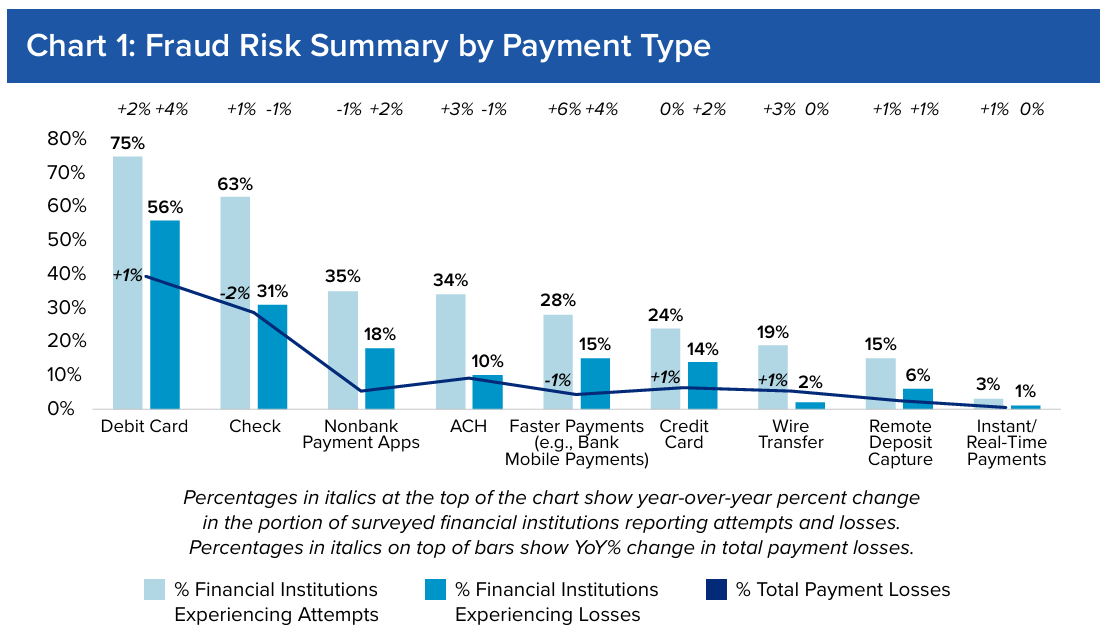
Despite these shifts, the overall distribution of fraud losses by payment type has remained relatively consistent over the past three years, with only modest fluctuations across individual categories.
Is Check Fraud Quietly Burning Out Your Best People?

Community banks are known for their employees. The teller who recognizes a customer at the grocery store. The bank manager who understand the needs of the local businesses. And, the operations specialist who “just knows” when a transaction looks off.
In a recent post, “Reclaiming the Bank: Why Check Fraud is Your Team’s Silent Talent Killer,” the Independent Community Bankers’ Bank (ICBB) shines a spotlight on a problem that many FIs are feeling, but not always naming: check fraud is slowly wearing down the very teams that keep everything moving.
Smart Glasses: The Next Tactic for Counterfeiting Checks?
A recent Toronto Police investigation into an “organized, sophisticated” retail fraud ring offers a preview of how AI‑enabled tools could be weaponized against financial institutions and the public.
Toronto Police report that a group operating across the Greater Toronto Area between September 2025 and February 2026 targeted large retailers with a coordinated scheme. Suspects allegedly used smart glasses and other AI‑enabled tools to observe and record employee login credentials at point‑of‑sale terminals and self‑checkout stations.

Lessons Learned: USPS Insider Sentenced to 5 Years in Prison for Stealing $24M in Checks

Last week, we discussed the various failures of the USPS. Failed audits, inoperable security equipment, and stolen keys were major threats. But, what happens when the threat becomes reality? Let's take a look at one of the most recent cases, where a former United States Postal Service employee in Charlotte, North Carolina, helped orchestrate one of the largest insider check theft schemes ever uncovered inside a USPS facility.
The International Monetary Fund Warning: Fraudsters Thrive on FIs Not Sharing Data
PYMNTS.COM reports on The International Monetary Fund’s recent warning to banks, which is simple: AI can help fight fraud, but only if institutions are willing to share data. That message applies just as strongly to check fraud, where banks still operate with limited visibility into what happened before a deposited item reaches their system.
Fraud has always thrived on information gaps. Today, criminals can move faster because AI helps them scale impersonation, document abuse, and coordination across multiple institutions, while banks often keep the data that could expose those patterns locked inside separate systems. Check fraud has the same structural weakness: one bank may see only a single deposit, not the broader pattern of the same bad actor, altered item, or stolen check showing up elsewhere.
IMF argues that the industry doesn't need better tools, it needs better visibility.

85% of Financial Firms are Increasing Their AI Budget in the Next 12 Months

While artificial intelligence has been around for decades, it's only in the past 5-10 years that we've seen a major boon for AI. Now, particularly for financial institutions, it seems that every day we see news about FIs of all sizes announcing new deployments of AI for everything from customer service to fraud detection. And, it appears that this trend will be increasing over the next 12 months.
Payment Modernization: Bad Data or Disconnected Systems?
One major issue plaguing financial institutions is data integrity. However, is it actually "bad data," or are FIs unable to connect legacy systems and leverage the data properly?
That’s the central message from Mladen Vladic of FIS in a recent PYMNTS discussion, and it hits squarely at the heart of today’s payments modernization agenda. For financial institutions, the question is no longer whether to use AI, but whether the underlying data and infrastructure can support it.

Three Paths to Modernization: Which Is Your FI Taking?

Over the past decade, the banking industry has seen a dramatic shift in how consumers and commercial clients perform their banking. This has lead to each financial institution embarking on a modernization journey to replace legacy systems such as OCR for check processing and even their core platform.
How AI Eliminates Manual Intervention in Check Processing
AI is delivering some of its clearest, most defensible ROI in banking by quietly re‑wiring workflows behind the scenes. As The Financial Brand explains, the biggest payoffs are emerging from “workflow facilitation,” where AI is embedded inside day‑to‑day processes instead of bolted on as a point solution.

House Hearing: Modernization of Fraud and Compliance Framework Needed

A new post from PYMNTS.com reports on a recent House Financial Services Subcommittee hearing focused the ways criminals are using AI, synthetic identities, and digital channels to exploit gaps in the current Bank Secrecy Act (BSA) framework.
USPS Audits Continue to Reveal Failures to Protect US Mail
For years, OrboGraph has tracked a troubling pattern: the United States Postal Service (USPS) conducts audits, the audits reveal serious security failures, recommendations are made — and the problems persist. The latest report from the USPS Office of Inspector General (OIG), released May 6, 2026, is no different.